
Learn the signs
Learn to read numbers like an ancient Egyptian.
Ancient Egyptian hieroglyphic numerals used one sign for each power of ten. Repeat the signs, add their values, and the number appears.
We designed Numerosidad first. Then we recognized its ancient cousin.
- Base tenThe sign values rise in powers of ten.
- Fixed valuesA sign keeps its value wherever it is written.
- Repeat and addUse up to nine of each sign, then total them.
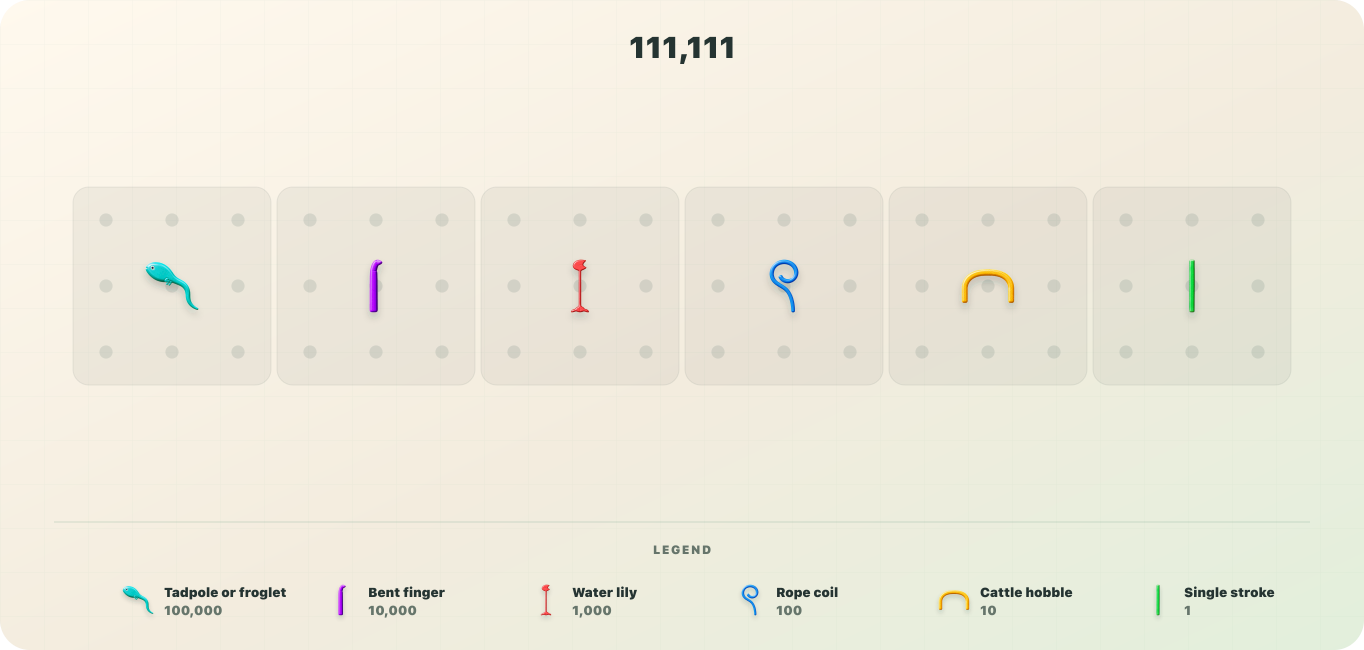
The sign family
Six signs take you from 1 to 100,000.
The names below describe the traditional hieroglyphic forms. The colorful versions are the exact Soft Arcade artwork used by Numerosidad.
-
 1
1Single stroke
Gardiner Z1
-
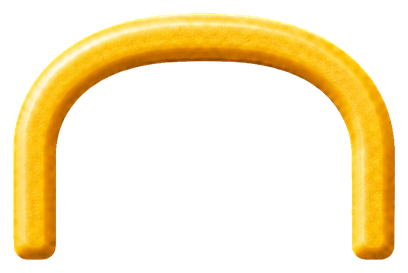 10
10Cattle hobble
Gardiner V20
-
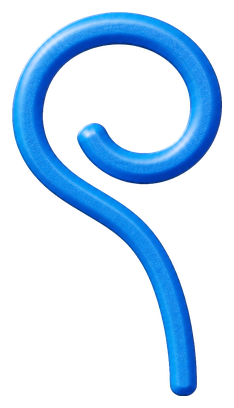 100
100Coil of rope
Gardiner V1
-
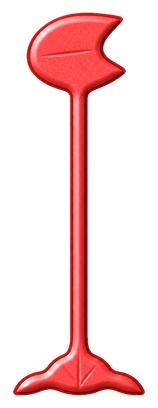 1,000
1,000Water lily
Gardiner M12
-
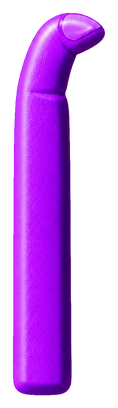 10,000
Bent finger
Gardiner D50
-
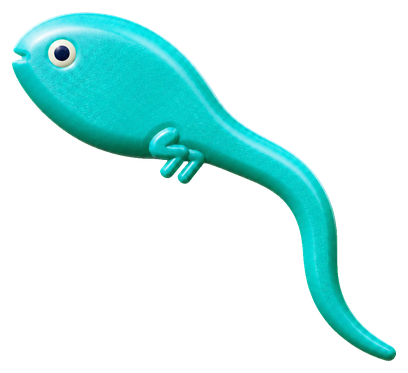 100,000
Tadpole or froglet
Gardiner I8
Historical sign lists also include a sign for 1,000,000. Numerosidad ends at 999,999, so its family uses the six signs that match the game’s six values.
How it works
Repeat. Add. Read the total.
Each sign has a fixed value
A rope coil means 100 wherever it appears. Its value comes from the sign itself, not its position.
Repeat signs and add
Two 10 signs and three 1 signs make 23. Ten copies of one value can be exchanged for one of the next value.
Order does not create the value
Signs followed writing conventions, but reshuffling them does not change the total the way moving a modern digit does.
Example one
23
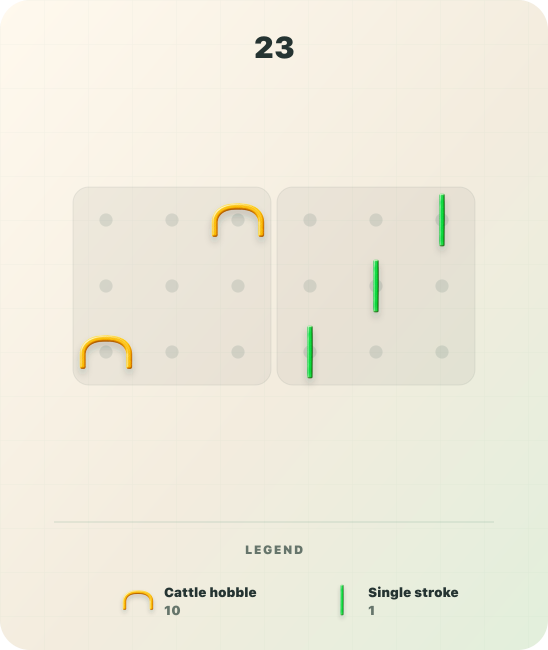
10 + 10 + 1 + 1 + 1 = 23
Example two
3,005
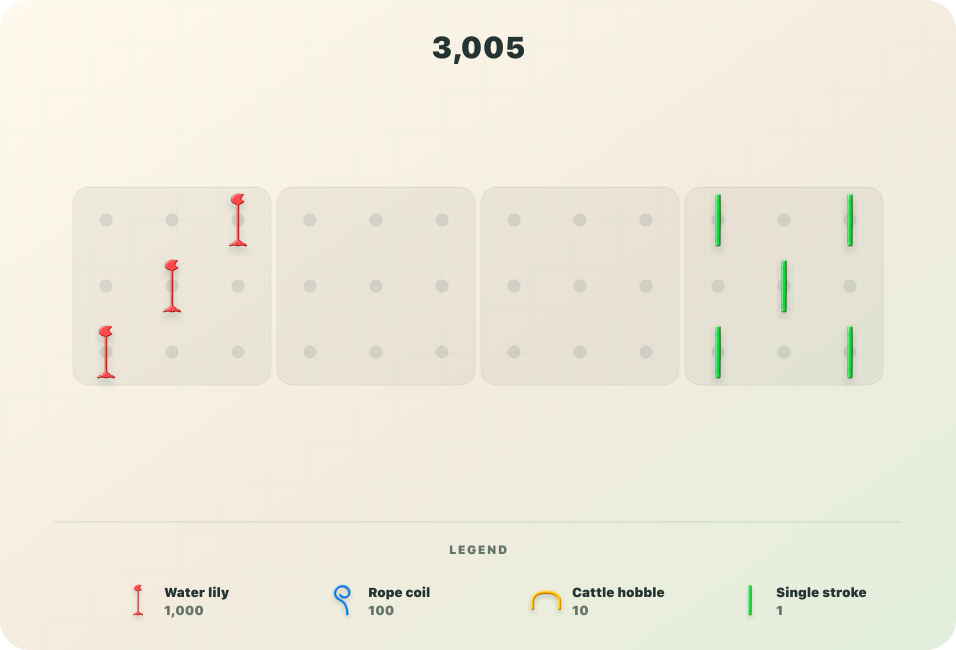
1,000 + 1,000 + 1,000 + 5 = 3,005
There are no 100 or 10 signs to write. This notation did not need a placeholder-zero sign; our modern numeral needs the two zeros to hold those places.
Ancient cousin, modern game
The same core rule—with an arcade translation.
Ancient Egyptian hieroglyphic numerals
Signs carry fixed values.
- Decimal powers from 1 upward
- Repeat a sign up to nine times
- Add the signs to find the total
- No placeholder zero needed in the notation
Numerosidad
Units carry fixed values.
- The same six decimal powers used by the game
- Lineup, Shuffle, Scatter, Mix-Up, and Chaos moving patterns
- Regrouping: ten lower units become one higher unit
- Translate the pattern into a modern numeric response
Good questions
Three details that make the system click.
Did the hieroglyphic numeral notation need a zero?
It did not need a placeholder-zero sign. If a number had no hundreds, the writer simply used no 100 signs. Our positional notation needs a zero to hold that empty place, as in 3,005.
Does the order of the signs change the number?
No. Writers followed visual and writing conventions, but each sign carried its own fixed value. Changing the arrangement does not change the sum. That is why Numerosidad can reorder matrices, scatter occupied slots, or remove matrix ownership without changing the numeric target.
Is Numerosidad a reconstruction of ancient Egyptian mathematics?
No. The shared idea is the additive decimal representation shown here. Numerosidad turns that idea into moving patterns, regrouping, time pressure, and translation into modern numerals.
Available in the game
Ancient Egyptian Numerals, built for live play.
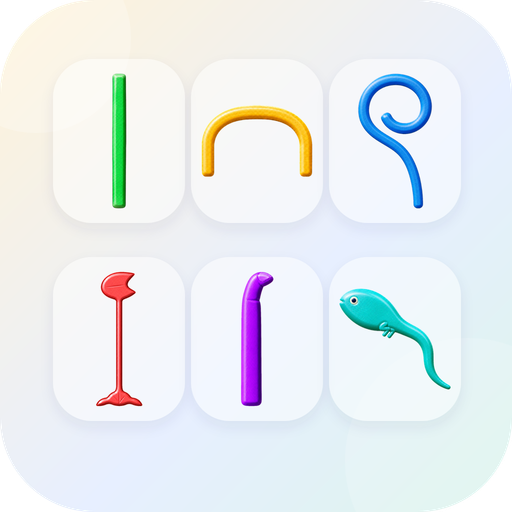
The Ancient Egyptian Numerals family is available now as an optional in-game purchase on Android and iPhone. It replaces the six standard unit designs with these historically grounded signs while preserving every value and gameplay rule.
- Available now on Android and iPhone
- Six distinct signs from 1 to 100,000
- Exact game artwork shown throughout this page
- Cosmetic only—no gameplay advantage
Sources and art note
Read further.
Historical sources
About the artwork
The colorful signs on this page are copyrighted Numerosidad game artwork based on standardized ancient Egyptian hieroglyphic forms. Complete Egyptian-family visualizations generated by the Number Atlas may be shared, adapted, and used commercially under CC BY 4.0 with credit to Entropycal Studio LLC. The standalone game icons remain owned game assets and are not separately released under CC0. See the image reuse policy.