
Curated mathematical collections
See how reviewed numbers connect
Move from one number page to a useful mathematical family, sequence, or composition pattern.
These bilingual topic hubs organize the existing reviewed Number Atlas collection. Each guide explains a mathematical idea, links the approved examples that belong to it, and offers comparison prompts. A topic page is a curated path through substantial pages, not a reason to publish every possible member as a thin page.
Choose a topic
Six useful ways to organize the collection
Begin with a sequence, a visual digit pattern, or the decimal structure you want to examine. Every linked number already has a reviewed page with a canonical number-symbol visualization and mathematical context.
11 reviewed pages
Fibonacci numbers
Each new term is the sum of the previous two terms.
11 reviewed values from 1 through 144
Explore this topic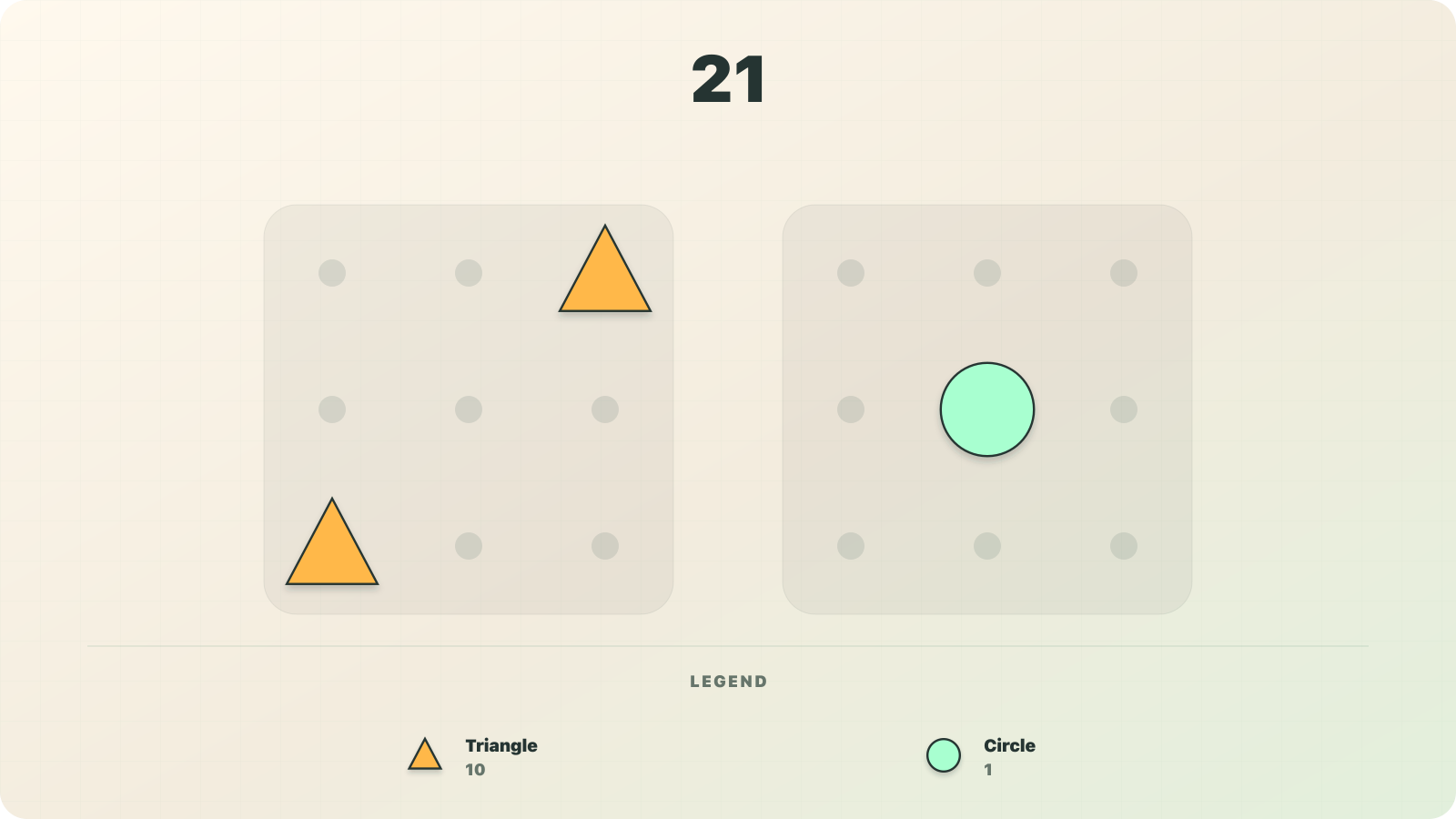
6 reviewed pages
Triangular numbers
Add the counting numbers from 1 through n.
6 reviewed triangular values
Explore this topic
12 reviewed pages
Palindrome numbers
Its digit sequence is unchanged when reversed.
12 reviewed palindromes
Explore this topic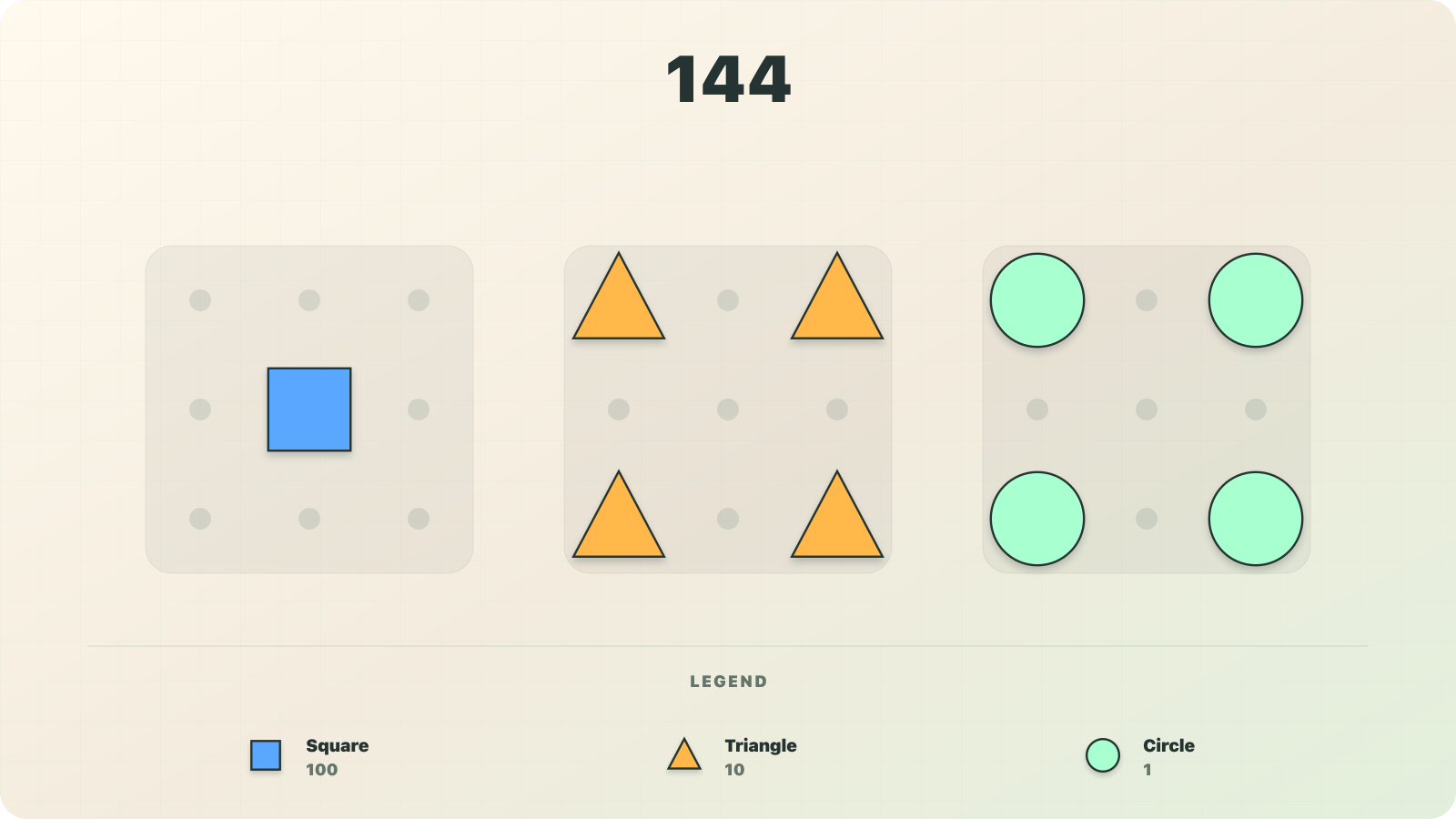
7 reviewed pages
Perfect square numbers
A whole number equals n multiplied by itself.
7 reviewed square values
Explore this topic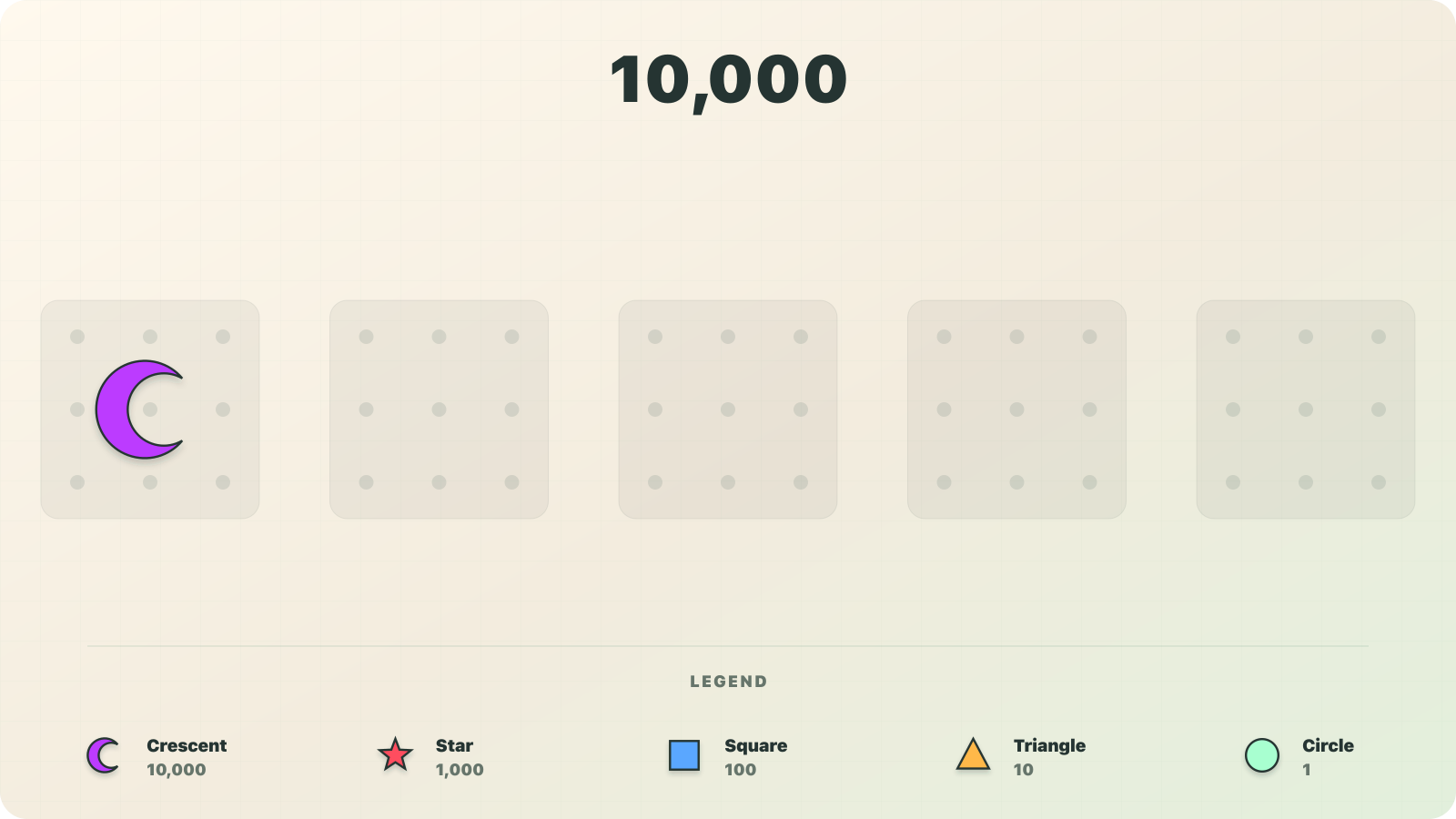
6 reviewed pages
Powers of ten
Multiply by 10 to move one place left.
6 reviewed decimal powers
Explore this topic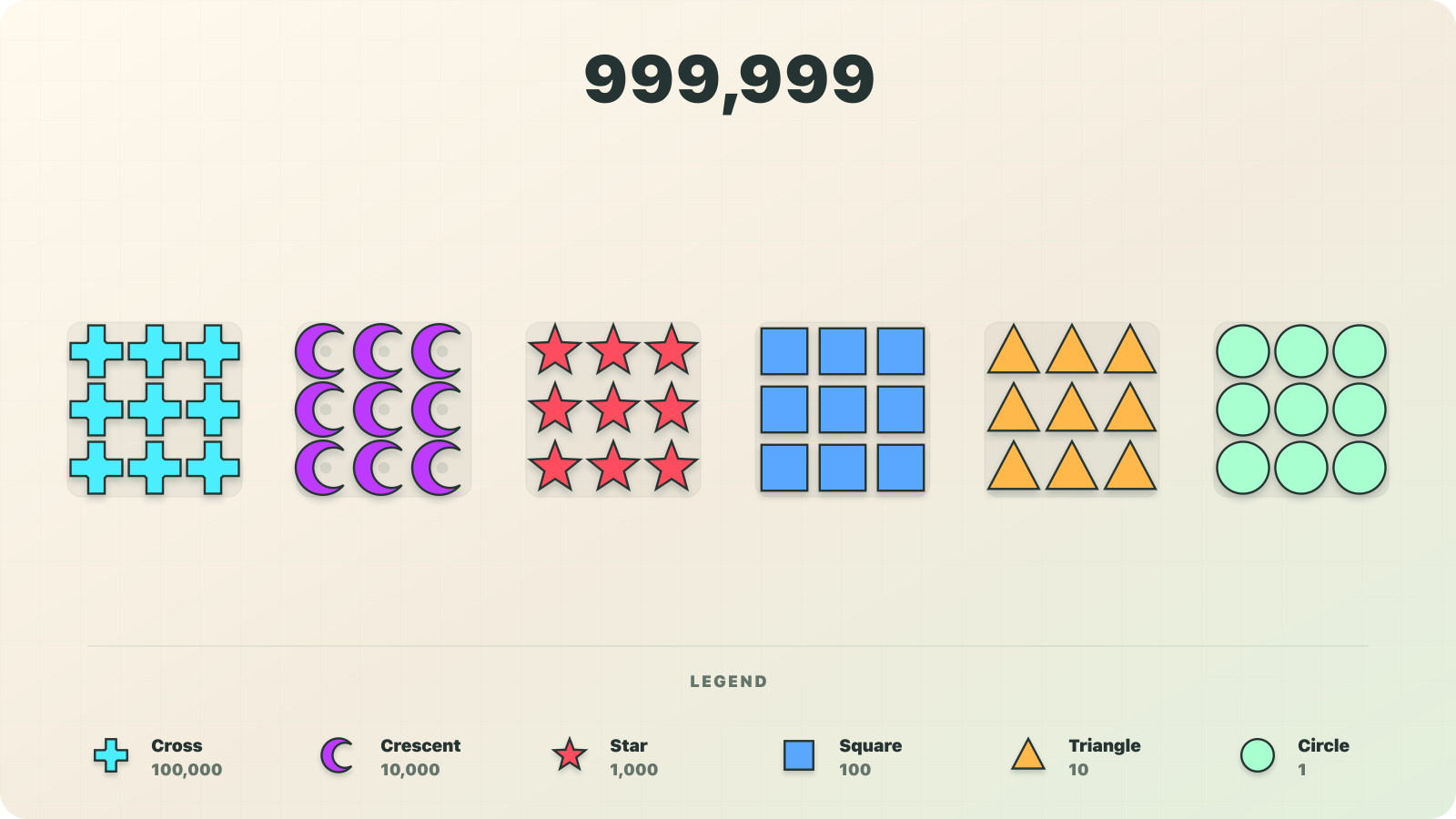
17 reviewed pages
Place value and fixed-value symbols
Each position is worth ten times the position to its right.
17 reviewed multi-digit pages
Explore this topicConnections across topics
Some reviewed numbers belong to more than one group
One begins several structures
1 is a square, a triangular number, a power of ten when written as 10 to the zero power, and a Fibonacci value. The topic changes what you notice about the same page.
Fibonacci and triangular
21 follows 8 and 13 in the Fibonacci sequence, and it also equals 1 + 2 + 3 + 4 + 5 + 6.
Sequence, sum, and symmetry
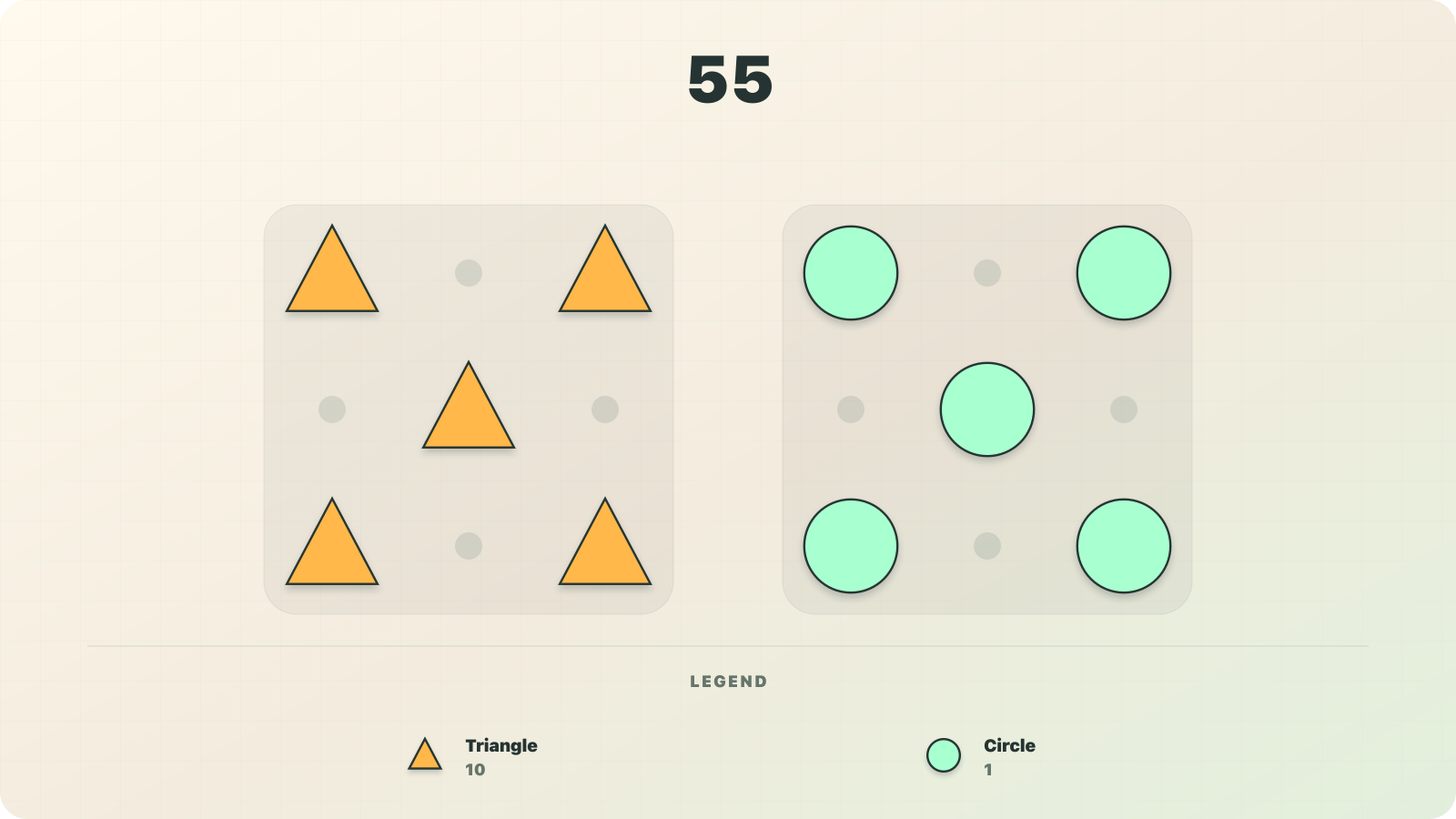
55 is Fibonacci, triangular, and palindromic. Its repeated digits also make its tens-and-ones structure easy to compare.
Fibonacci and square
144 follows 55 and 89 in the Fibonacci sequence and equals 12 squared, while its digits span hundreds, tens, and ones.
Collection boundary
Reviewed examples first
The topic membership lists are intentionally limited to the existing 26 reviewed permanent number pages. The interactive Atlas can visualize any whole number from 1 to 999,999, but a visualization does not automatically become a new indexable page. New permanent pages still require a distinct purpose, reviewed writing, verified mathematics, and a useful place in the collection.
Current boundary: 26 reviewed permanent pages, organized here without expanding the cohort.